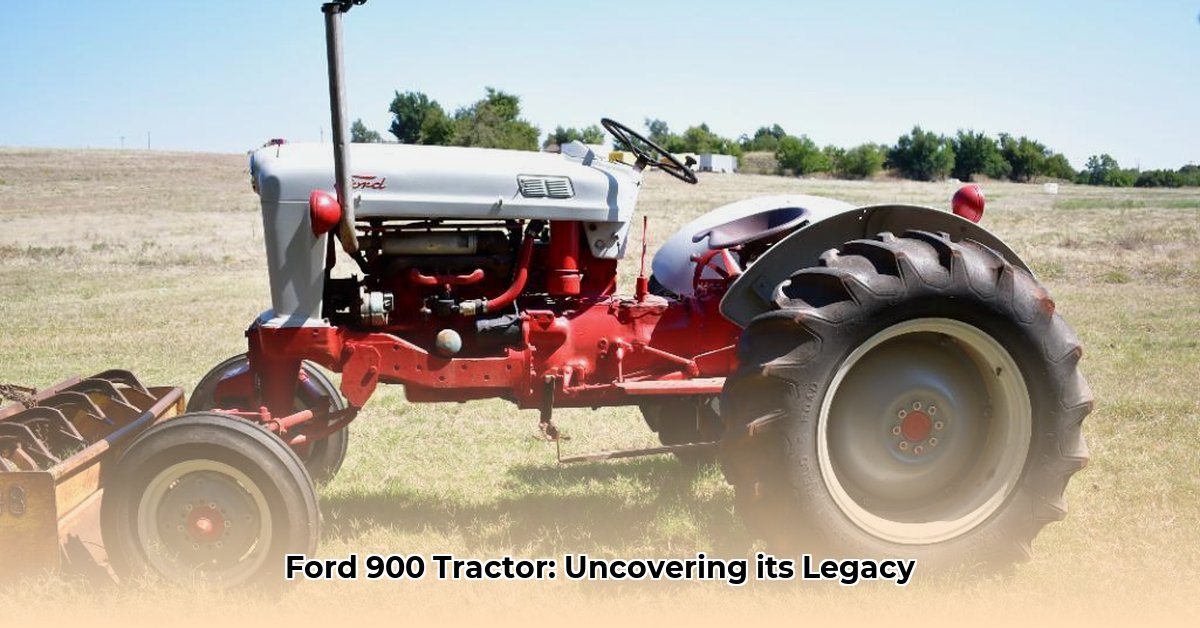
Ford 900 Tractor: A Legacy in the Fields
The Ford 900 tractor, particularly the popular 960 model, wasn't merely another agricultural machine; it represented a significant leap forward in farming technology. Introduced in the mid-1950s, its impact resonated across the agricultural landscape. Innovative features like the live power take-off (PTO) system (a mechanism that transfers power from the tractor's engine to implements) and a robust five-speed transmission dramatically increased efficiency. Farmers could plow fields faster and more effectively, leading to significantly higher yields. This increase in horsepower was transformative, akin to the shift from horse-drawn plows to motorized power - a true revolution in farm productivity. How much did this boost daily output? The ability to complete significantly more work in a single day resulted in substantial productivity gains. For more on Ford tractors, see this related information.
This technological advancement, however, came at a cost. In 1957, a new Ford 900 tractor cost approximately $2,561—a substantial investment. This spurred a shift towards larger, more mechanized farms, demanding greater capital investment. Yet, the increased profitability ultimately justified the expense for many farmers. Even today, the Ford 900 maintains a strong presence at auctions, reflecting enduring demand from collectors and enthusiasts. This consistent popularity underscores the tractor's inherent quality and enduring place in agricultural history. What accounts for this continued interest? Its robust design, lasting performance, and connection to a bygone era of farming make it a highly sought-after item.
However, the environmental impact of early tractors like the Ford 900 shouldn't be overlooked. Fueled by gasoline and lacking the emission controls of modern machinery, fuel efficiency was comparatively lower. Manufacturing, concentrated in Highland Park, Michigan, also reflected a different era, with less emphasis on environmental sustainability. The contrast between the Ford 900 and modern environmentally-conscious farm equipment is striking. What are the long-term environmental consequences of this early mechanization? This is a subject of ongoing research and debate among agricultural historians and environmental scientists.
The increased power enabled the use of larger implements, leading to the cultivation of larger fields, transforming farming operations. Comprehensive manuals and repair guides further highlight the evolution of support networks for more complex machinery—providing insight into the development of maintenance strategies and supply chains. How did this influence the broader agricultural economy? The availability of detailed support documentation points to a ripple effect on logistics and overall economic structure.
The Ford 900's legacy offers valuable insights for various stakeholders. Consider these diverse perspectives:
| Stakeholder Group | Short-Term Goals (0-1 year) | Long-Term Goals (3-5 years) |
|---|---|---|
| Vintage Tractor Owners/Collectors | Maintain and restore tractors, source original parts, document history. | Build communities, share restoration knowledge, explore environmentally-friendly restoration methods. |
| Agricultural Historians | Research the evolution of farm equipment and its societal impact. | Conduct in-depth studies on early mechanization’s environmental effects. |
| Sustainable Agriculture Advocates | Analyze efficiency gains in older tractor designs for improvement ideas. | Promote environmentally responsible manufacturing standards for all farm equipment. |
| Agricultural Equipment Manufacturers | Compare historical fuel efficiency and emission data with modern standards. | Invest heavily in R&D to develop more efficient, sustainable farm equipment. |
The Ford 900's enduring legacy is undeniable. While limited by the technology of its time, it significantly reshaped agriculture. It marked a turning point in farming mechanization, raising crucial considerations about efficiency, cost-effectiveness, and environmental responsibility. Its presence at auctions and in private collections highlights its historical importance and lasting impact on modern sustainable farming practices. Further research will undoubtedly continue to reveal more about its long-term consequences. What does the future hold for understanding its impact? Ongoing research promises a deeper understanding of this iconic tractor's profound influence on agriculture.
How to Sustainably Restore a Vintage Ford 900 Series Tractor
Key Takeaways:
- Restoring a Ford 900 tractor is a substantial undertaking, demanding significant time and resources. Costs vary widely, from several thousand dollars for basic repairs to tens of thousands for a thorough overhaul. How much does a full restoration typically cost? Experienced restorers estimate tens of thousands of dollars for a complete and proper restoration.
- The labor-intensive process can require hundreds of hours. Meticulous planning and efficient resource management are essential. What's the average time commitment? Hundreds of hours of labor are expected for a comprehensive restoration.
- Sourcing parts for older tractors can be a significant challenge, adding to both time and cost. How difficult is it to locate parts? Obtaining specific parts can prove challenging and costly.
- Sustainable restoration emphasizes responsible resource use and minimizes environmental impact. This may include using reclaimed or recycled parts, eco-friendly paints and solvents, and proper disposal of hazardous materials. What's the key to an environmentally responsible restoration? Minimizing environmental impact is key, involving responsible resource use and waste disposal practices.
Assessing the Challenge: Costs and Time Investment
Before commencing any work, it's crucial to understand the financial commitment. Restoring a Ford 900 tractor represents a substantial investment. Estimates range from thousands to tens of thousands of dollars, depending on the tractor's condition and the scope of the restoration. Why is it so expensive? The cost includes not only parts but also the extensive labor required. Expect to invest a substantial amount of time, potentially hundreds or even thousands of hours. Is the investment worthwhile? For many, the satisfaction and connection to agricultural history overshadow the cost.
Sustainable Restoration: Beyond Aesthetics
A truly sustainable restoration extends beyond cosmetic improvements. It considers the entire lifecycle, from sourcing components to waste management. Why prioritize sustainability? Minimizing environmental impact, while often more cost-effective, achieves a far better outcome both environmentally and economically. Using reclaimed or recycled parts, choosing eco-friendly paints and solvents, and properly disposing of hazardous materials are essential aspects of a sustainable approach.
A Step-by-Step Approach to Sustainable Restoration
- Assessment and Planning: Begin with a thorough assessment of the tractor's condition. Develop a detailed plan encompassing both mechanical and cosmetic aspects. Create a realistic budget, considering the potential for unforeseen expenses.
- Parts Sourcing: Prioritize sourcing parts from reputable suppliers who offer used or refurbished options. Explore the use of 3D printing for hard-to-find components. What are the key considerations for parts sourcing? Prioritize used or refurbished parts and, where appropriate, utilize 3D printing.
- Sustainable Materials: Select eco-friendly paints, lubricants, and cleaning solvents. Look for options with low VOC (volatile organic compound) content. What type of materials should be used? Employ paints, lubricants, and solvents with low VOC content.
- Waste Management: Properly dispose of hazardous waste—oil, fluids, and paint thinner—according to local regulations. Maximize recycling opportunities. How should waste materials be handled? Follow all relevant local regulations for proper and safe disposal of hazardous materials.
- Mechanical Restoration: Systematically address mechanical components, prioritizing functionality and safety. Replace worn parts and rebuild necessary systems.
- Cosmetic Restoration: After addressing mechanical issues, focus on cosmetic restoration, preserving the tractor's original character.
The Rewards of Sustainable Restoration
Restoring a Ford 900 tractor yields significant rewards. It's more than just mechancial restoration; it involves preserving a piece of history, connecting with the past while embracing a sustainable future. What is the ultimate reward of such a project? The satisfaction of operating a responsibly restored tractor, a testament to both heritage and environmental stewardship, is unparalleled.